Long flights can feel endless—hours of recycled air, dim cabin lights, and limited movement. But for traveling artists, those same hours offer something rare: uninterrupted creative time. Sketching on long flights transforms travel downtime into a productive, calming, and deeply enjoyable part of the journey. With the right tools, mindset, and techniques, you can turn your seat into a tiny airborne studio and arrive at your destination already creatively warmed up.
This guide explores how to stay creative in the air, what to sketch, how to work comfortably in tight spaces, and how to make the most of your time between takeoff and landing.
Why Sketching on Long Flights Is So Rewarding
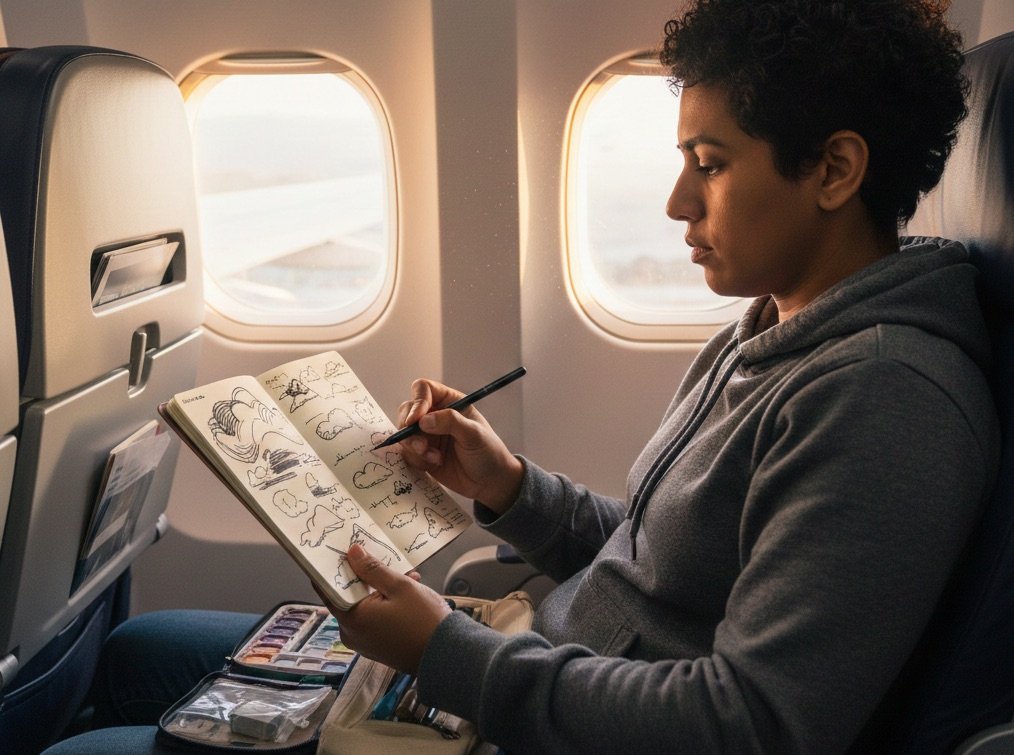
Sketching during a long flight helps you stay relaxed, focused, and mentally engaged. The hum of the engines, the limited distractions, and the gentle rhythm of the cabin create an ideal environment for creative flow. Many artists find that drawing in the air helps ease travel anxiety, reduces boredom, and sparks new ideas before they even reach their destination.
It’s also a perfect opportunity to warm up your hand, experiment with new techniques, or capture the unique atmosphere of air travel—something many sketchbooks rarely include.
Preparing Your In‑Flight Sketching Kit
Keep It Compact and TSA‑Friendly
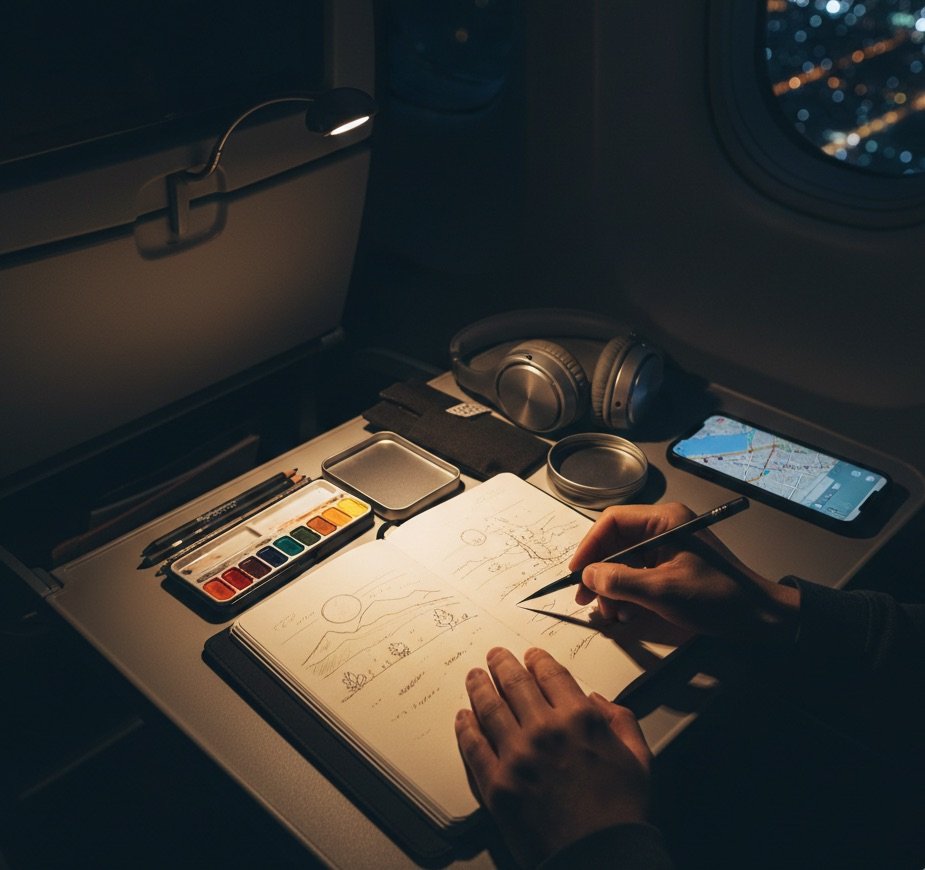
Space is limited, so choose tools that are small, quiet, and easy to manage. A pocket sketchbook or A5 notebook fits perfectly on a tray table. Waterproof fineliners, mechanical pencils, and a small travel watercolor set (or water‑brush pens) are ideal for tight spaces.
Do you prefer "Urban Sketching" or "Nature Journaling"?
Choose Tools That Don’t Roll
Rounded pens and pencils love to escape down the aisle. Opt for hex‑barrel tools or keep a small cloth pouch on your lap to prevent runaway supplies.
Bring a Backup Light Source
Cabin lighting varies, and window seats can get dim during night flights. A small clip‑on reading light helps you sketch without straining your eyes.
Use a Minimalist Palette
A limited color palette—such as a warm/cool triad or a simple grayscale—keeps things manageable and reduces clutter on your tray table.
What to Sketch During a Long Flight
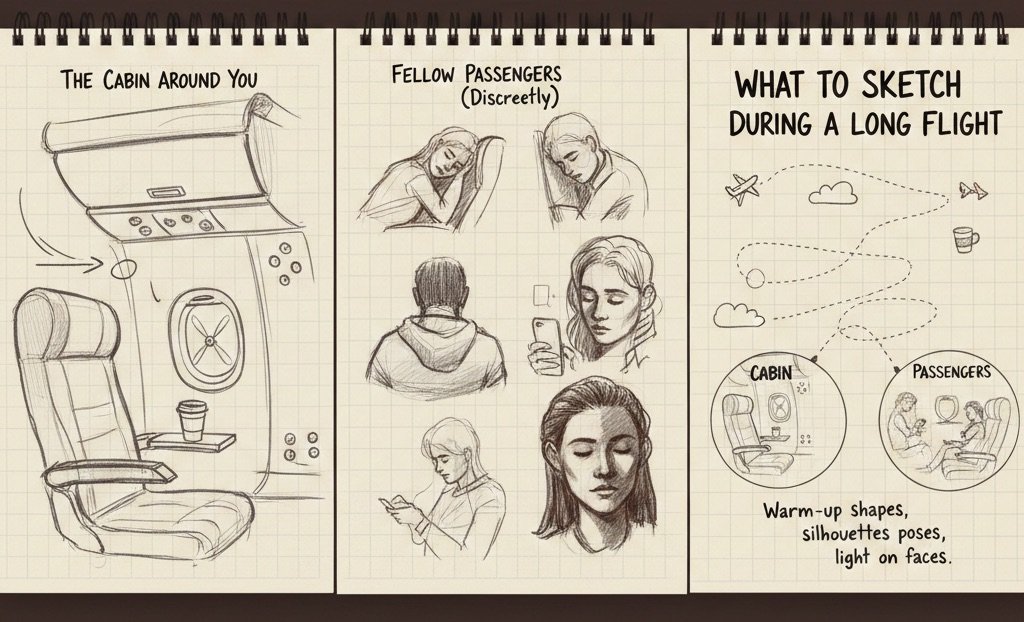
The Cabin Around You
Airplanes are full of interesting shapes: seatbacks, overhead bins, window frames, and the curve of the fuselage. These make great warm‑up sketches and help you settle into the rhythm of drawing.
Fellow Passengers (Discreetly)
People on flights tend to stay still for long periods, making them excellent subjects for gesture drawing. Capture silhouettes, sleeping poses, or the way light falls across faces and clothing.
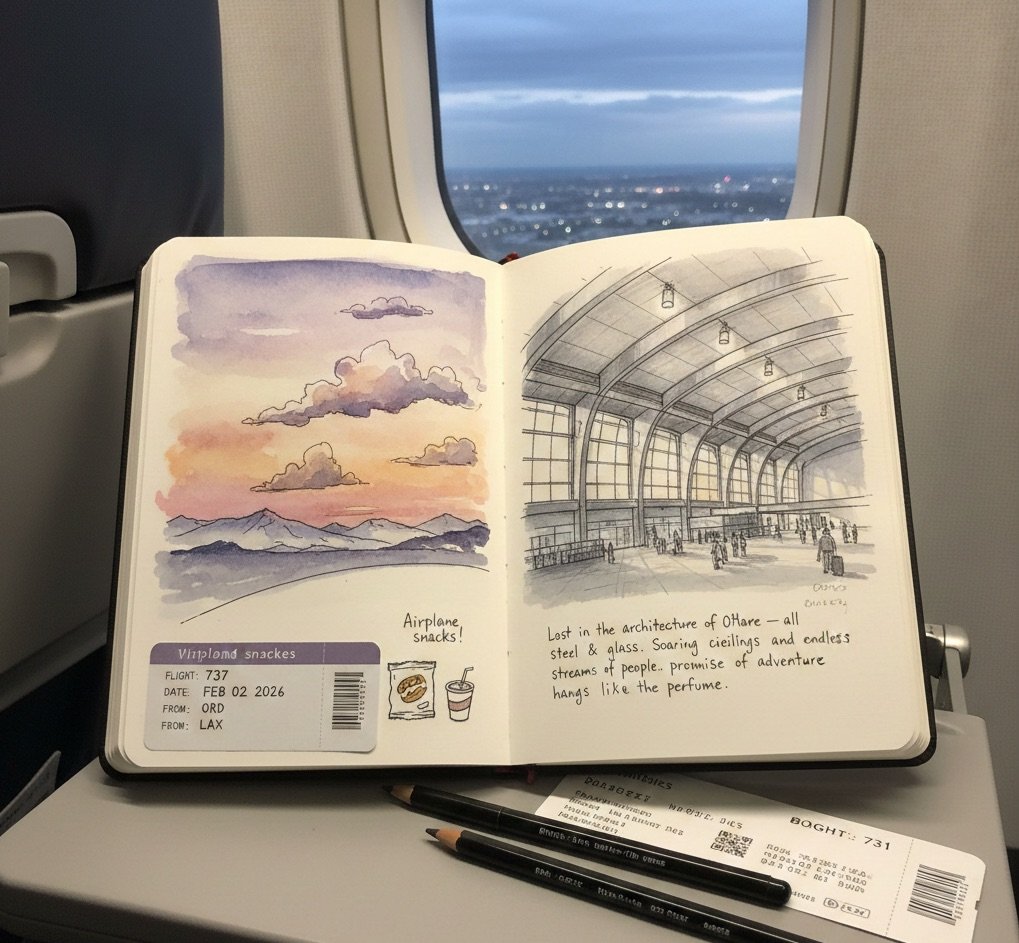
Clouds and Sky Views
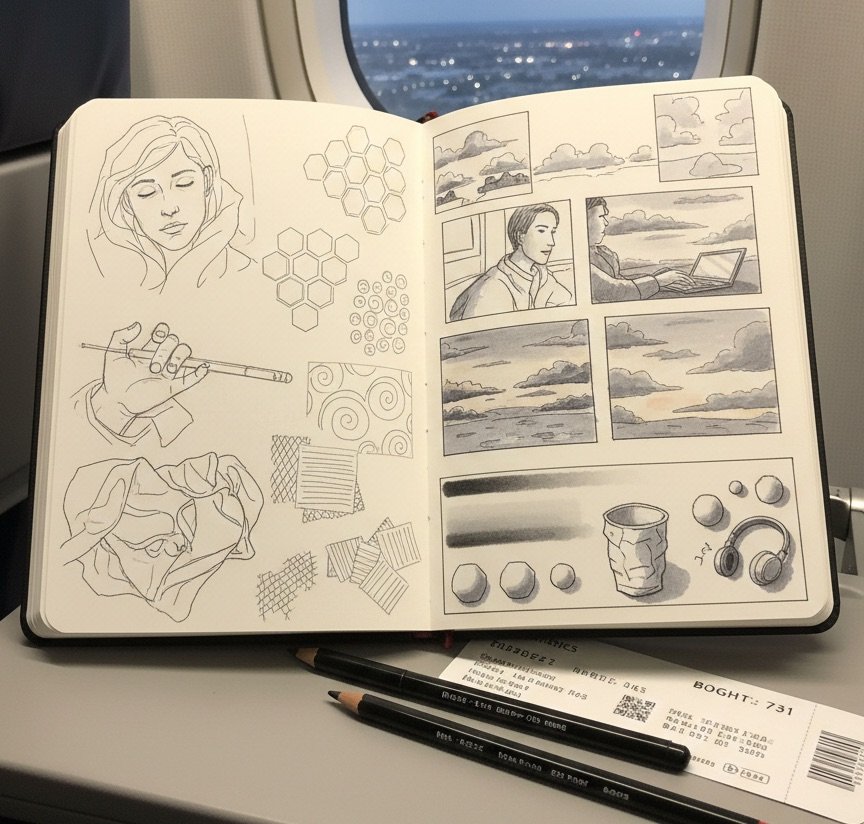
If you have a window seat, the sky becomes your canvas. Sketch cloud formations, horizon lines, or the shifting colors during sunrise or sunset.
Travel Journaling
Use your sketchbook to document the journey—boarding scenes, airport architecture, snacks, ticket stubs, or notes about your destination. These small details enrich your travel diary and make your sketchbook feel alive.
Practice Studies
Long flights are perfect for exercises like:
These help you stay creative without needing a full setup.
Techniques for Sketching Comfortably in Tight Spaces
Stabilize Your Sketchbook
Rest the sketchbook on your lap or against the tray table to reduce turbulence‑induced wobble. A firm backing board or a hardcover sketchbook helps keep lines steady.
Work Small
Tiny sketches are easier to manage and require less elbow room. A page filled with mini‑studies can be more interesting than one large drawing.
Use Quick, Confident Lines
Airplanes vibrate, so slow, delicate lines can be tricky. Embrace the movement and use bold strokes that capture the essence rather than the precision of the scene.
Keep Your Supplies Accessible
Store your tools in the seat pocket or a small pouch on your lap. Avoid rummaging through your bag mid‑flight.
Take Breaks
Stretch your hands, roll your shoulders, and rest your eyes. Long flights can be tiring, and short breaks help maintain comfort and creativity.
Staying Inspired When You’re Tired
Use Prompts
If you’re too exhausted to think of what to draw, use simple prompts like:
- “Draw what’s directly in front of me.”
- “Sketch the shape of the light.”
- “Capture the mood of the cabin.”
Embrace Imperfection
Airplane sketches don’t need to be masterpieces. Think of them as warm‑ups, experiments, or visual notes.
Listen to Music or Ambient Sounds
Noise‑canceling headphones and a relaxing playlist can help you slip into a creative flow.
Let the Journey Influence Your Style
The motion of the plane, the limited space, and the changing light can all shape your drawings in interesting ways. Let the environment guide your hand.
Creative Exercises Perfect for Long Flights
Gesture Drawing
Capture quick poses of passengers or flight attendants as they move through the cabin.
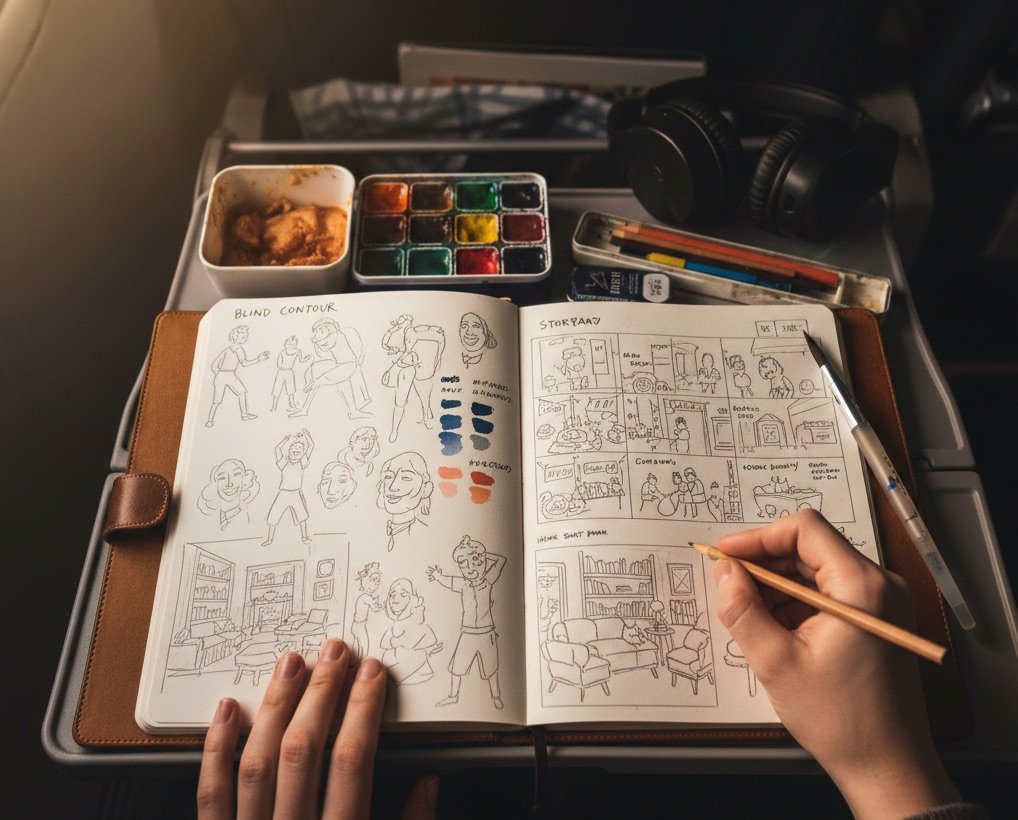
Blind Contour Sketching
Draw without looking at the page—great for loosening up and embracing spontaneity.
Color Swatches
Test your palette by creating small color blocks inspired by the cabin’s interior or the sky outside.
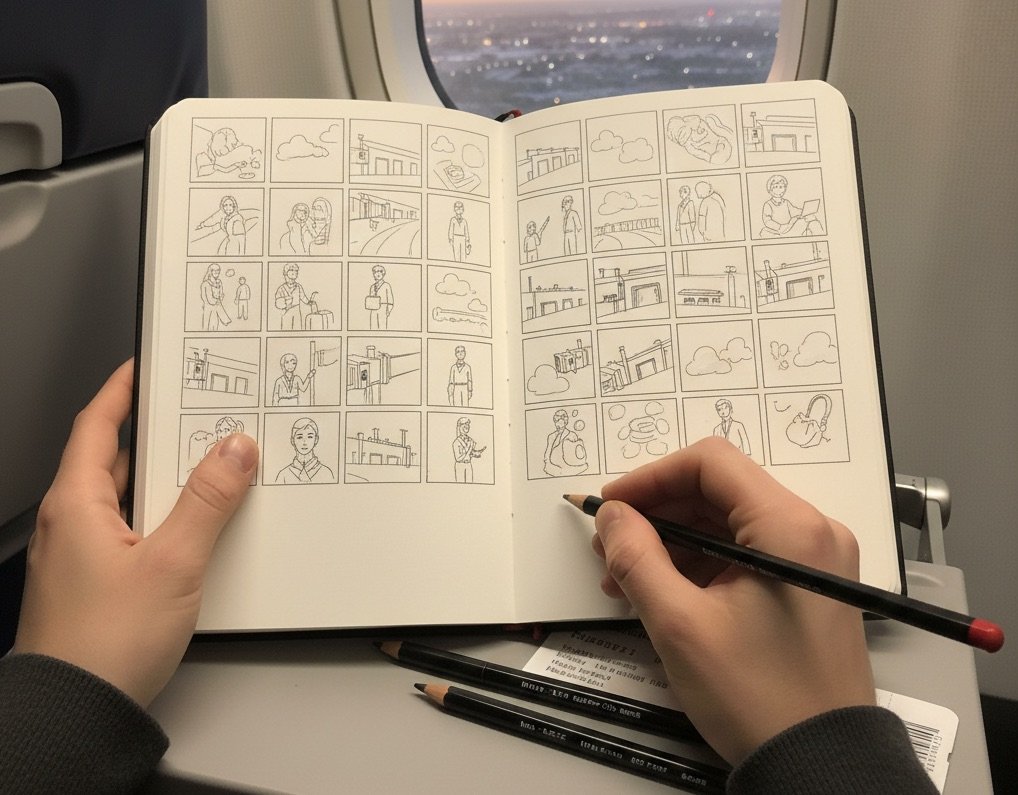
Storyboarding
Plan scenes you want to sketch at your destination. This builds anticipation and helps you arrive creatively prepared.
Memory Sketching
Close your eyes and draw from memory—your home, your last trip, or a place you’re excited to visit.
Why Sketching Makes Long Flights Feel Shorter
Sketching shifts your focus away from the monotony of travel. Hours pass quickly when your mind is engaged, and drawing helps reduce stress, restlessness, and screen fatigue. Many artists find that sketching on flights becomes one of their favorite parts of the journey—a quiet, personal ritual that turns travel time into creative time.
 artistEarth | ART ON THE GO
How to Sketch Quickly in Busy Places
Sketching in busy places is one of the most energizing — and challenging — experiences for traveling artists. Whether you’re drawing in a crowded market, a bustling train station, a lively plaza, or a busy...
Frequently Asked Questions
What’s the best sketchbook size for long flights?
A small or medium sketchbook (A6–A5) fits comfortably on a tray table and is easy to manage.
Can I bring watercolors on a plane?
Yes, solid watercolor pans and water‑brush pens are allowed and work well in tight spaces.
What should I sketch if I’m feeling tired?
Start with simple shapes, quick studies, or small observational drawings to ease into creativity.
Is it okay to sketch other passengers?
Yes, as long as you’re discreet and respectful—focus on silhouettes rather than detailed faces.
How do I deal with turbulence while drawing?
Use bold lines, brace your sketchbook, and embrace the natural looseness it adds to your work.
What if I don’t have a window seat?
Sketch the cabin interior, your hands, your seat area, or practice small exercises and studies.
How can I keep my tools from rolling away?
Use hex‑shaped pens, magnetic clips, or a small pouch on your lap to keep everything contained.
Is sketching better than watching movies on long flights?
It depends on your mood, but sketching keeps your mind active and helps the time pass creatively.
Final Thoughts
Sketching on long flights turns travel time into creative time. With a compact kit, a relaxed mindset, and a willingness to experiment, you can transform hours in the air into pages of expressive drawings, warm‑ups, and visual memories. Whether you’re capturing the curve of the wing, the glow of cabin lights, or the quiet stillness of fellow travelers, sketching helps you stay grounded—even at 35,000 feet. It’s a simple, rewarding way to stay creative on the move and arrive at your destination already connected to your artistic flow.
Ready to Share Your Work?
Every travel sketch on artistEarth.com comes from the Sketchbooks.org community. Share your work to be discovered here, and / or join us as a Travel Editor.
 From the Sketchbooks Community