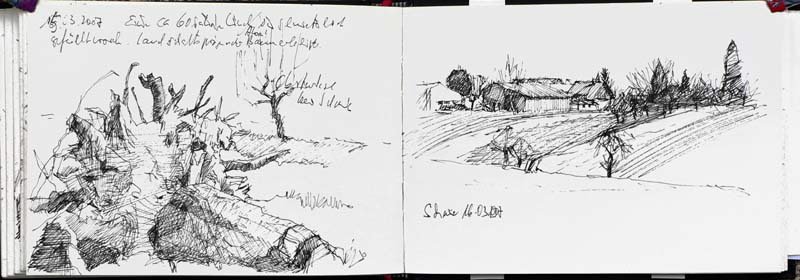
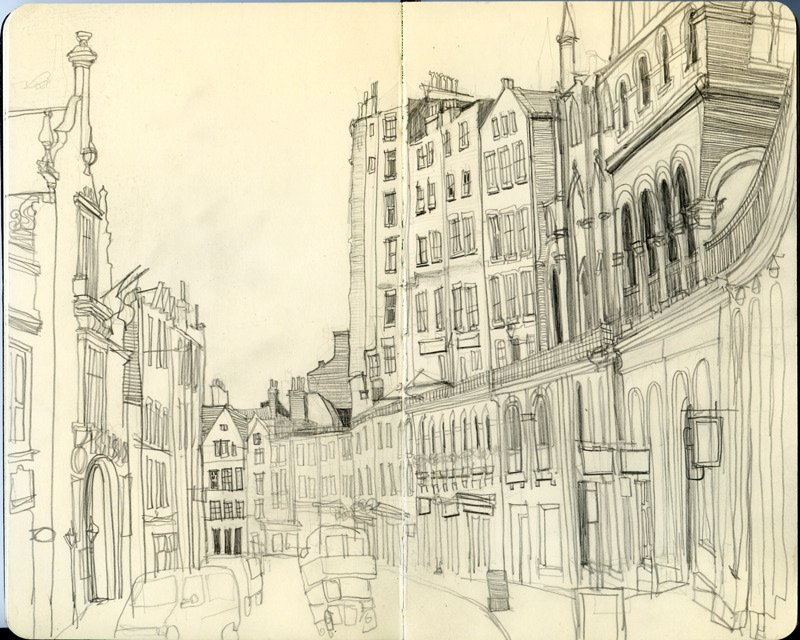
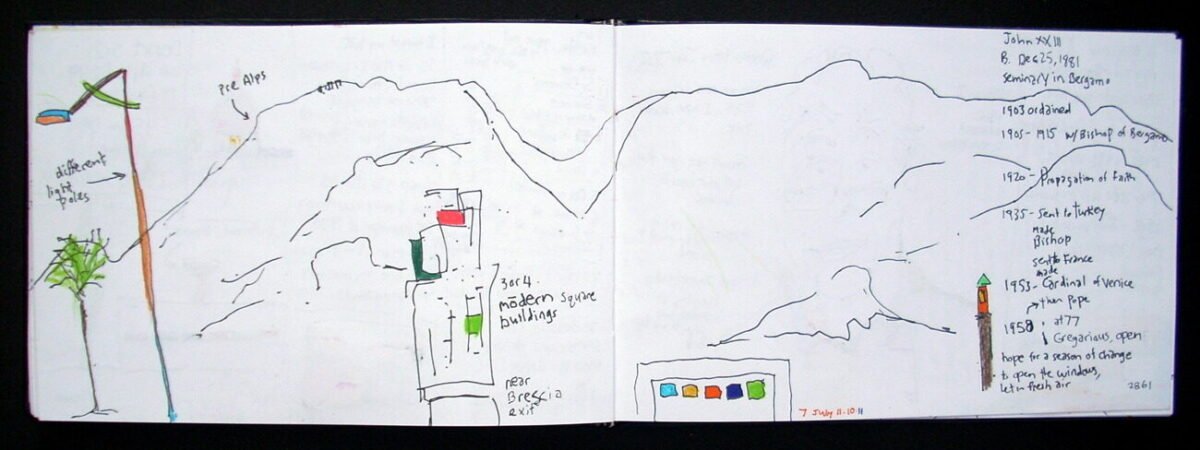
Maps are more than navigation tools—they’re creative companions. For artists, writers, travelers, and curious thinkers, maps open doors to imagination, storytelling, and visual discovery. This post is about transforming simple geographic tools into sources of inspiration, helping you see the world (and your art) in new ways. Whether you’re planning a trip, sketching from home, or building a creative practice rooted in place, maps can spark ideas that lead to deeper, more meaningful work.
Why Maps Are Powerful Creative Tools
Maps help you understand the world visually. They reveal patterns, shapes, distances, and relationships that aren’t obvious from ground level. For creative people, this perspective becomes a springboard for imagination.
Maps can:
- Connect you to places you’ve never visited
- Inspire sketchbook ideas
- Reveal cultural and geographic context
- Help you plan creative journeys
- Spark storytelling and world‑building
- Encourage mindful observation
Using maps for creative exploration isn’t about accuracy—it’s about curiosity.
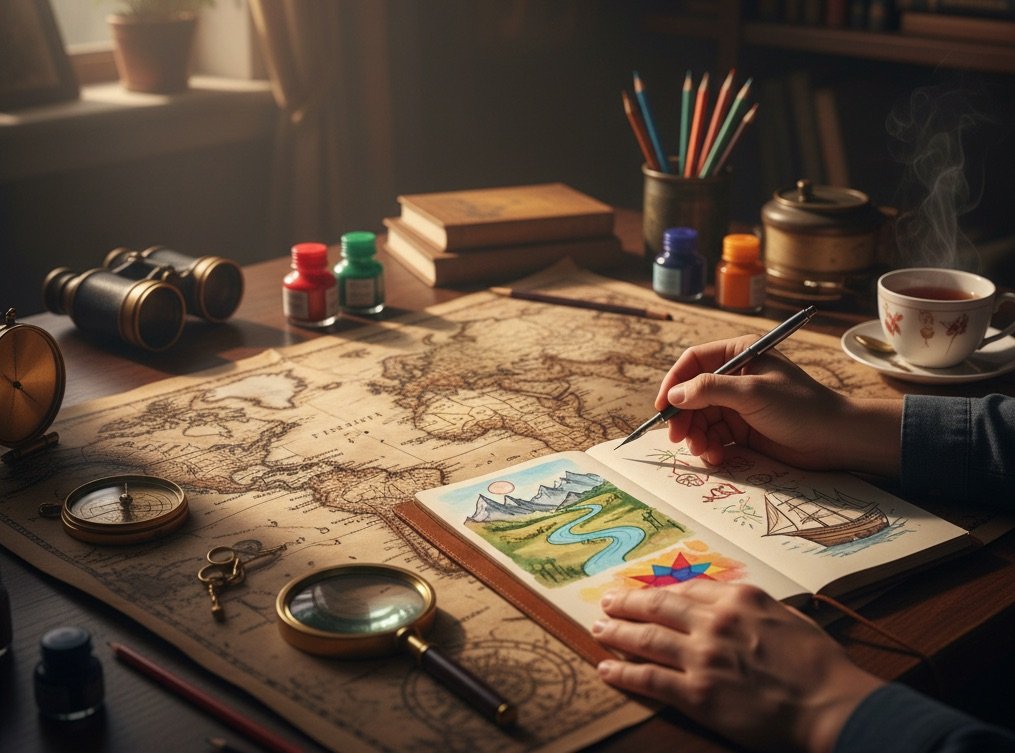
Using Maps to Spark Artistic Inspiration
Study Shapes and Silhouettes



Every country, coastline, and region has a unique outline. These shapes can inspire:
How do you prefer to document a new destination?
- Abstract drawings
- Pattern design
- Logo concepts
- Composition ideas
Tracing or sketching silhouettes helps you see geography as pure form.
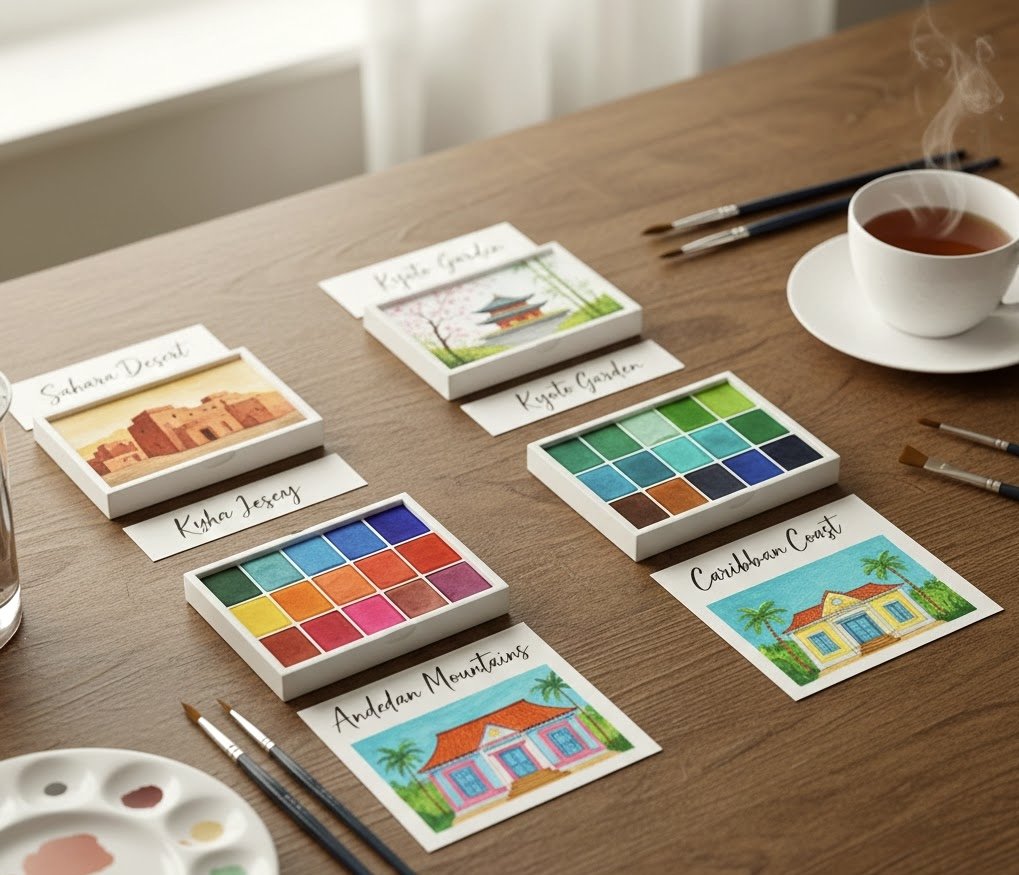
Explore Color Through Regional Landscapes
Satellite maps reveal natural palettes—desert ochres, forest greens, glacial blues, volcanic blacks. These colors can inspire:
- Travel sketching palettes
- Landscape studies
- Mood boards for creative projects
Maps become a visual reference for understanding how color defines place.

Use Maps as Backgrounds for Sketchbook Pages
A faint map outline behind a drawing adds depth and context. It can frame:
- Travel sketches
- Journaling pages
- Collage spreads
- Illustrated notes
This technique blends geography with personal storytelling.
Using Maps for Travel Sketching and On‑Location Creativity
Plan Creative Routes
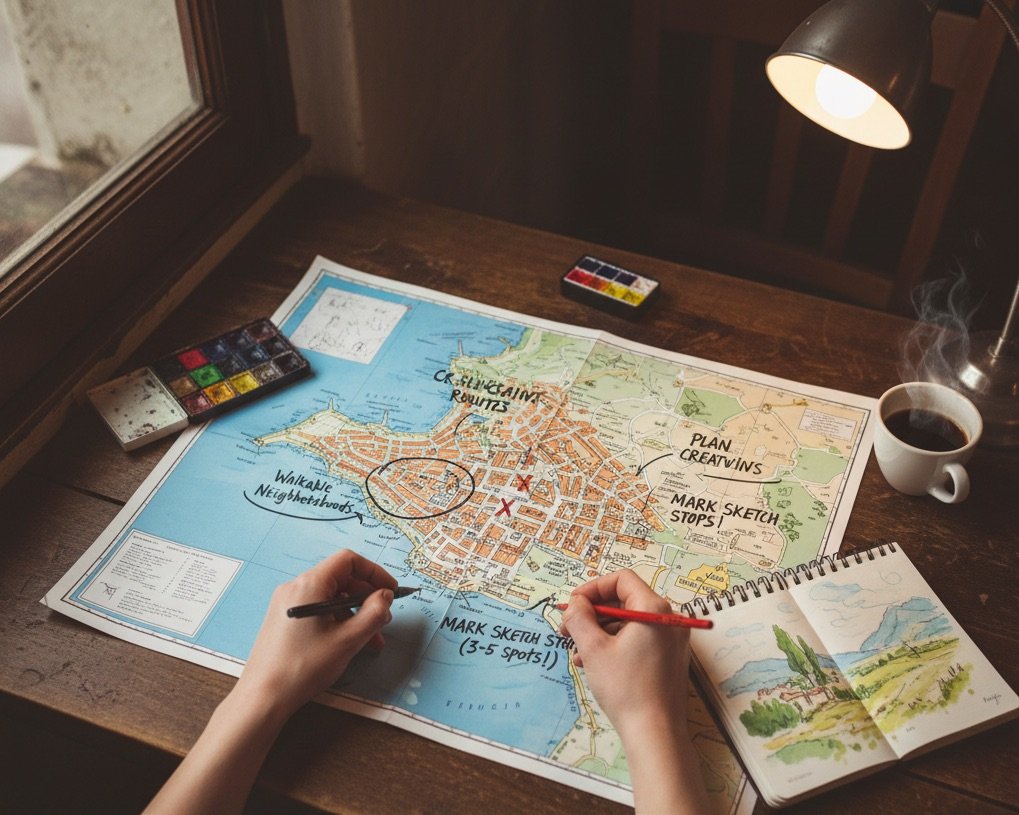
Maps help you identify:
- Markets and cultural hubs
- Scenic viewpoints
- Walkable neighborhoods
- Waterfronts
- Historic districts
Planning with maps ensures your creative time is spent in visually rich places.
Mark “Sketch Stops”
Choose 3–5 spots on a map where you want to pause and draw. This turns wandering into a creative ritual and helps you stay intentional.
Use Maps to Understand Light and Landscape
Maps aren’t just navigation tools — they’re quiet, powerful guides for understanding how light moves across a place and how the land itself shapes what you’ll see. When you approach them this way, they become part of your creative toolkit, helping you anticipate atmosphere, color, and mood long before you arrive on location.
Topographic maps reveal elevation, which affects:
- Light direction
- Shadow length
- Atmospheric color
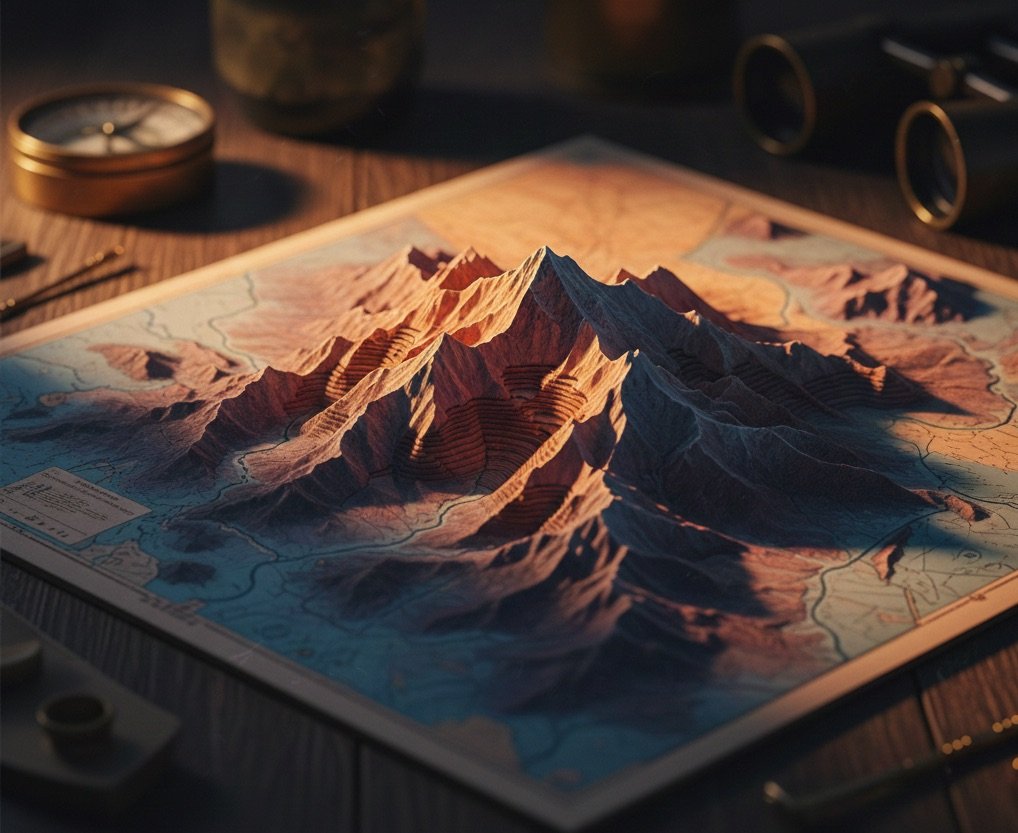
This helps you anticipate the mood of a place before you arrive. Even a quick glance at elevation can tell you whether a place will feel crisp and bright or muted and atmospheric.
Using Maps for Creative Writing and Storytelling
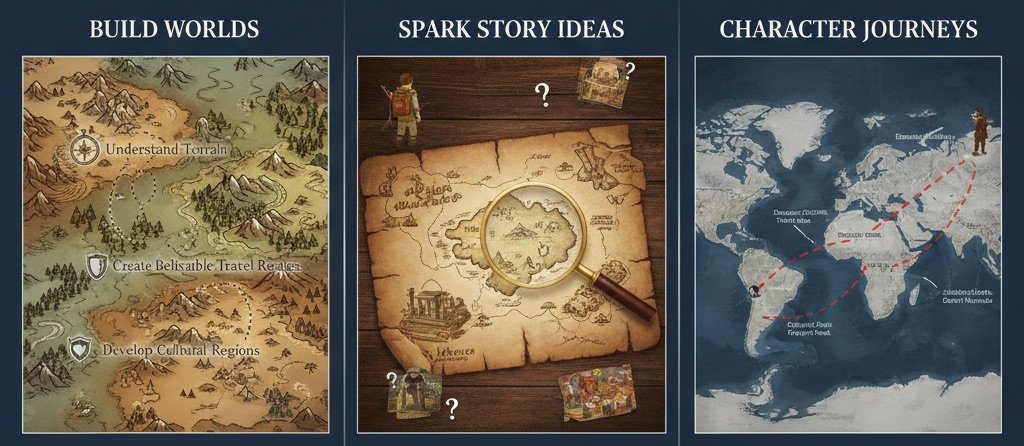
Build Worlds Using Real Geography
Even fictional worlds benefit from real‑world references. Maps help you:
- Understand terrain
- Create believable travel routes
- Develop cultural regions
- Visualize climate and ecosystems
Writers often use maps to anchor imagination in reality.
Use Maps to Spark Story Ideas
Zoom in on a random location and ask:
- Who lives here
- What stories unfold in this landscape
- What history shaped this place
Maps become prompts for narrative exploration.
Create Character Journeys
Plotting a character’s path on a map helps you understand:
- Distance
- Time
- Obstacles
- Cultural transitions
This adds realism and depth to storytelling.
Using Maps for Personal Reflection and Journaling
Track Your Creative Life
Mark places that shaped your artistic journey:
- Cities you’ve sketched
- Museums you’ve visited
- Landscapes that inspired you
- Places you dream of exploring
This becomes a visual autobiography.
Create “Memory Maps”
Draw your own map of a place you love—your neighborhood, a childhood home, a favorite travel destination. Memory maps blend:
- Emotion
- Geography
- Personal symbolism
They’re powerful tools for reflection.
Use Maps to Set Creative Goals
Pin or highlight places you want to sketch, visit, or learn about. This turns your map into a vision board.
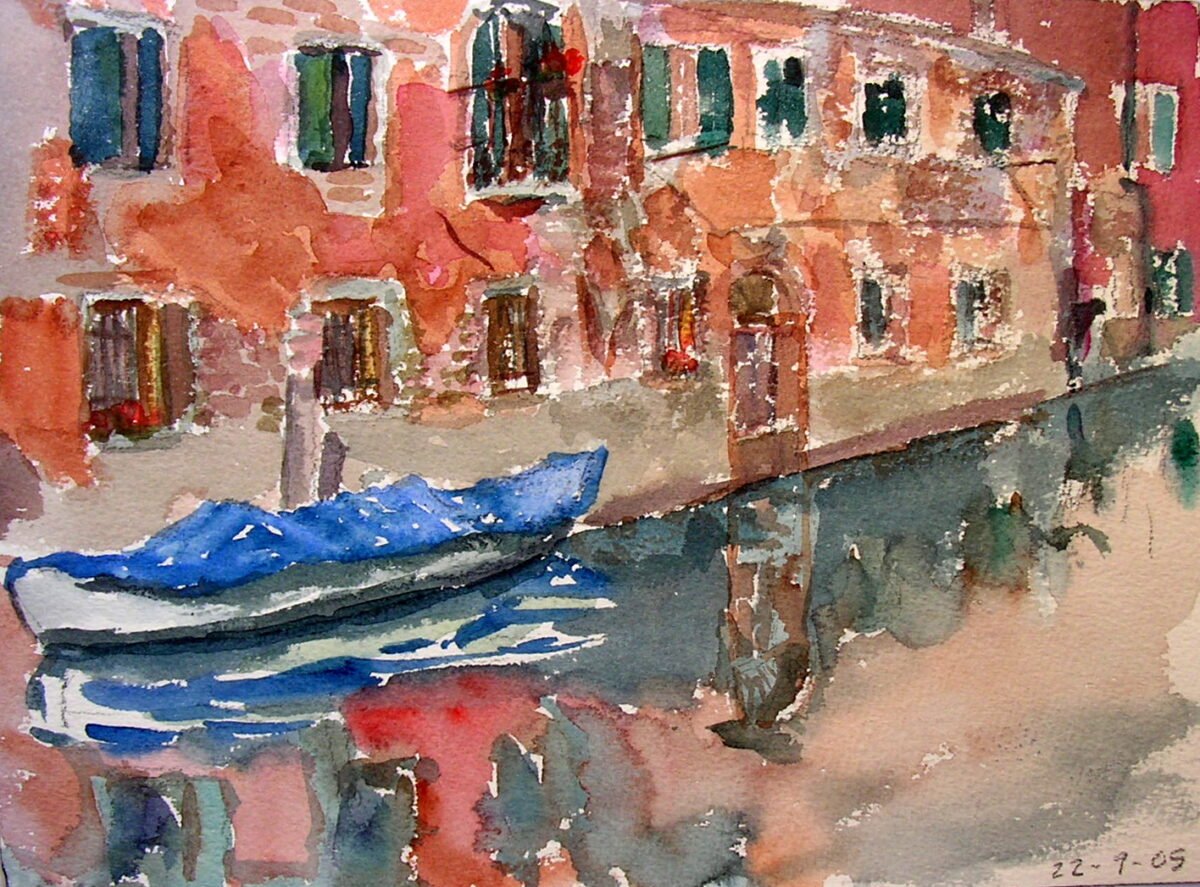
Digital Maps for Creative Exploration
Use Satellite View for Texture and Color
Satellite imagery reveals:
- River patterns
- Mountain ridges
- Coral reefs
- Agricultural grids
These textures inspire abstract art and pattern design.
Use Street View for Reference Sketching
Street View lets you:
- Practice urban sketching from home
- Explore architecture
- Study light and shadow
- Capture everyday scenes
It’s a virtual sketching playground.
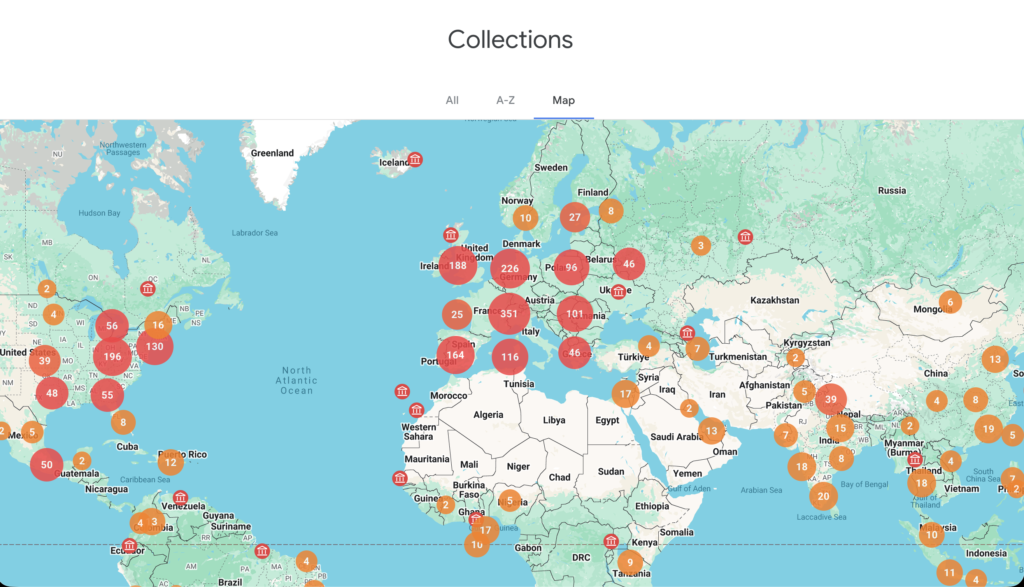
Google Arts & Culture | MAP
One of the most powerful tools for traveling artists is the platform’s MAPS feature. It allows you to explore museums, cultural sites, and artistic landmarks across the globe, all pinned to an interactive world map.
Use Map Layers for Deeper Understanding
Layers like terrain, transit, and historical overlays help you see:
- How cities evolved
- How landscapes shape culture
- How people move through space
This adds richness to your creative work.
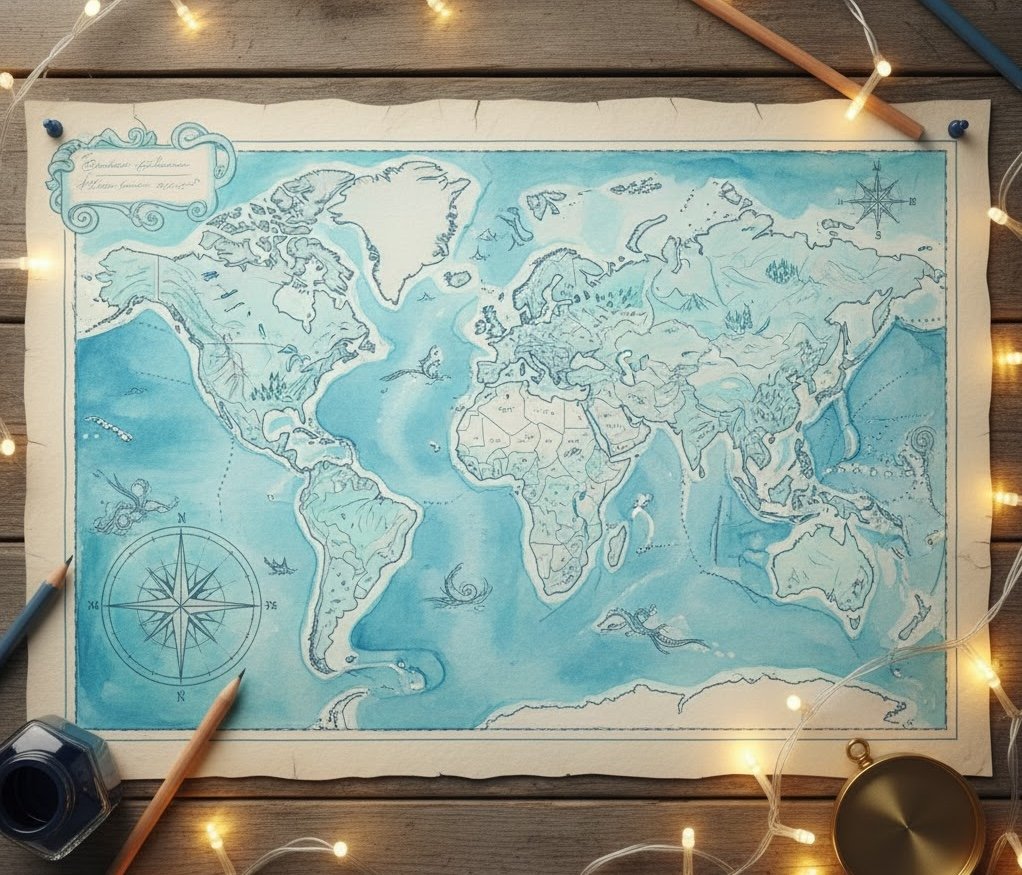
Analog Maps for Hands‑On Creativity
Draw Your Own Maps
Hand‑drawn maps encourage:
- Imagination
- Playfulness
- Personal symbolism
They don’t need to be accurate—just expressive.
Use Maps in Collage
Old maps make beautiful collage elements for:
- Travel journals
- Mixed‑media art
- Scrapbooks
- Sketchbook spreads
Their textures and typography add character.
Annotate Maps With Notes and Sketches
Write or draw directly on a printed map:
- Observations
- Color swatches
- Mini sketches
- Travel memories
This turns the map into a living document.
artistEarth | DESTINATIONS
Drawing Canada | Artistic Travel Gems Coast to Coast
Canada is a breathtaking canvas for artists seeking inspiration beyond the studio walls. With its diverse landscapes, vibrant cities, and serene hideaways, sketching across this vast country offers a fulfilling journey fueled by natural beauty...
Frequently Asked Questions
How can maps help with creative exploration?
Maps reveal shapes, colors, and patterns that spark artistic ideas and deepen your understanding of place.
Do I need to be traveling to use maps creatively?
Not at all—digital maps let you explore the world from home and find endless inspiration.
What types of maps are best for artists?
Satellite maps, topographic maps, and simple outline maps each offer unique creative possibilities.
Can maps improve my travel sketching?
Yes, maps help you plan routes, find inspiring locations, and understand the landscape before you arrive.
How do writers use maps creatively?
Maps help writers build believable worlds, plot character journeys, and spark story ideas.
Are hand‑drawn maps useful for creativity?
Absolutely—drawing your own maps encourages imagination and personal expression.
Can maps help me build a color palette?
Yes, satellite imagery reveals natural color schemes that reflect the character of a region.
What’s the easiest way to start using maps creatively?
Begin by sketching simple outlines or exploring satellite textures for inspiration.
Final Thoughts
Consider this an invitation to see the world differently. Maps aren’t just tools for navigation—they’re gateways to imagination, storytelling, and artistic discovery. Whether you’re sketching from a window seat, exploring a new city, or dreaming from home, maps help you connect with place in a deeper, more intentional way. They encourage curiosity, spark ideas, and enrich your creative journey.
Ready to Share Your Work?
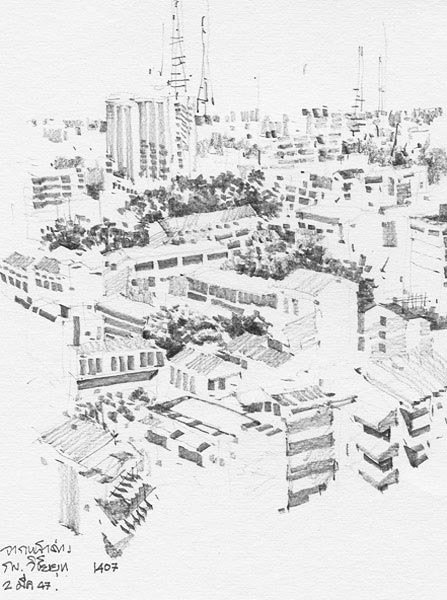
Every travel sketch on artistEarth.com comes from the Sketchbooks.org community. Share your work to be discovered here, and / or join us as a Travel Editor.
 From the Sketchbooks Community