Creating a museum‑friendly art kit is one of the smartest moves an artist can make—especially if you love sketching in galleries, studying masterworks up close, or turning museum visits into part of your creative practice. Museums are inspiring, but they also come with rules, restrictions, and environmental quirks that require a different setup than your everyday travel art kit. Building a dedicated kit ensures you’re always prepared, always respectful of museum policies, and always able to sketch comfortably without stress.
Why You Need a Separate Museum‑Friendly Art Kit
Museums are unique environments. They’re quiet, controlled, and designed to protect priceless artworks. That means your usual tools—watercolors, inks, markers, blades, sprays, and bulky accessories—are often not allowed. A separate museum‑friendly art kit ensures you can sketch freely without worrying about breaking rules or being asked to stop.
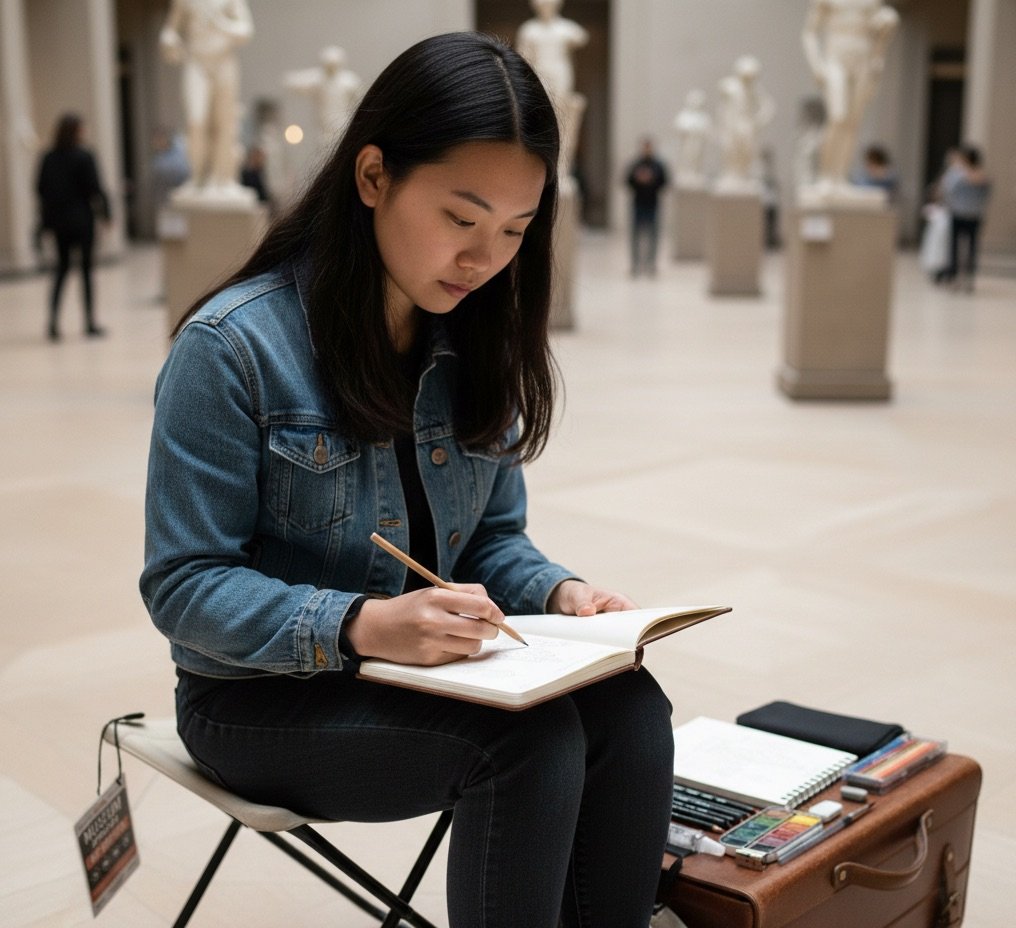
A dedicated kit also:
- Reduces the stress of reorganizing your main travel kit
- Keeps your museum tools clean and ready
- Prevents accidental packing of prohibited items
- Helps you move quickly and quietly through galleries
- Encourages more frequent sketching during museum visits
Think of it as your “gallery mode”—a streamlined, respectful, and highly functional setup.
Understanding What Museums Allow (and Don’t Allow)
Before building your kit, it’s important to understand typical museum policies. While rules vary, most museums follow similar guidelines.
Do you set a "Sketching Goal" for your trips?
Commonly Allowed Tools
- Dry media only (graphite, charcoal pencils, colored pencils)
- Small sketchbooks
- Handheld tools that don’t obstruct walkways
- Quiet, compact pencil cases
- Minimal accessories
Commonly Prohibited Tools
- Wet media (watercolor, ink, markers, brush pens)
- Paints of any kind
- Scissors, blades, or sharp tools
- Spray fixatives
- Large sketchbooks or drawing boards
- Tripods, easels, or stools in narrow galleries
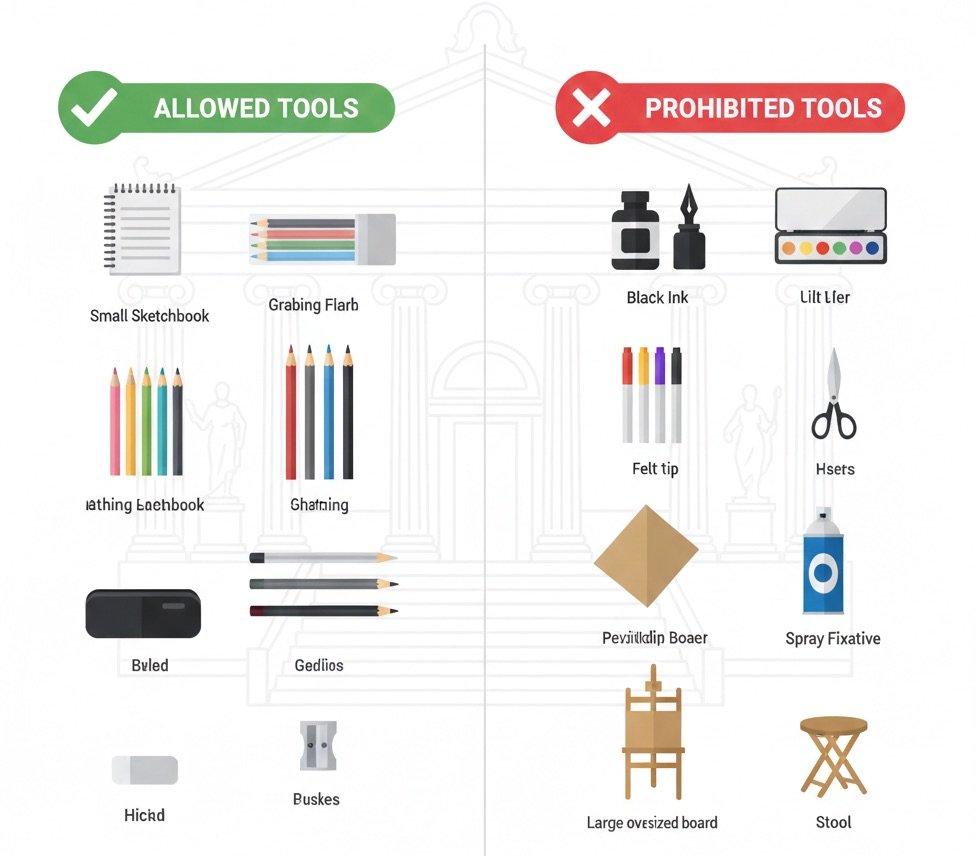
Your museum‑friendly art kit should be built around these limitations while still supporting your creative flow.
Choosing the Right Sketchbook for Museum Drawing
Your sketchbook is the centerpiece of your museum‑friendly art kit. It needs to be portable, discreet, and easy to use while standing or sitting.
Ideal Sketchbook Features
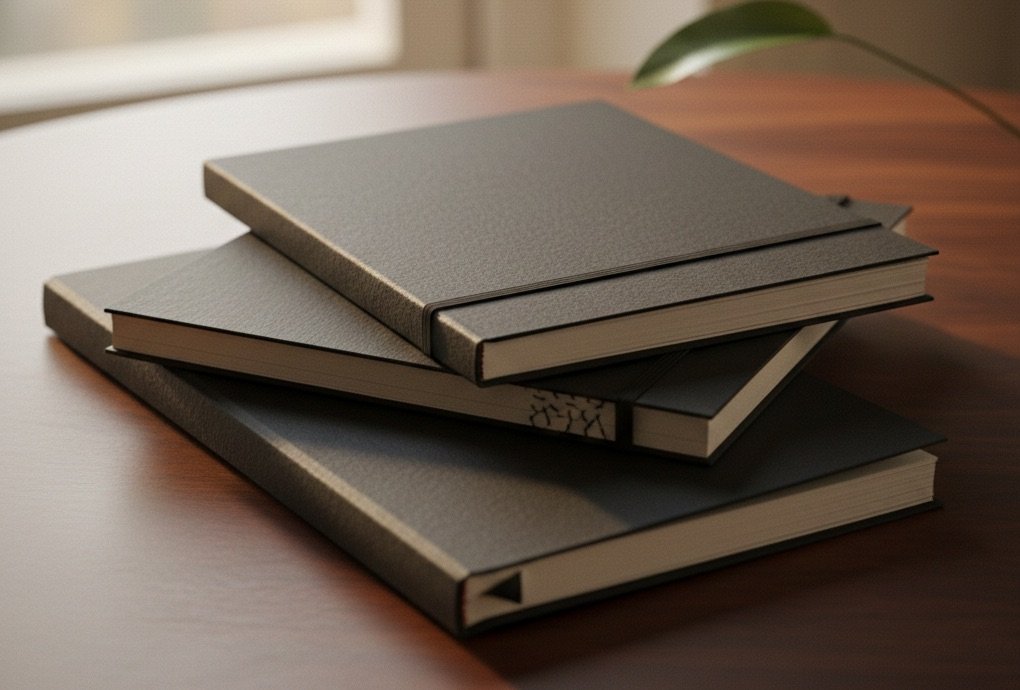
- Size: A5 or smaller
- Binding: Lay‑flat or stitched
- Cover: Hard or semi‑hard for stability
- Paper: Smooth, durable, and suitable for dry media
- Color: Neutral covers blend in better in quiet spaces
A small sketchbook also helps you stay unobtrusive—an important part of museum etiquette.
Essential Dry Media Tools for Museum Sketching
Since wet media is usually off‑limits, your museum‑friendly art kit should focus on dry tools that offer versatility without mess.
Mechanical Pencils
Mechanical pencils are ideal because they:
- Don’t require sharpening
- Stay clean and precise
- Are quiet to use
- Fit easily in small cases
Choose a few lead grades (HB, 2B, 4B) for variety.
Graphite Pencils
If you prefer traditional pencils, bring:
- Pre‑sharpened pencils
- A small, enclosed sharpener
- A kneaded eraser
Avoid open sharpeners that scatter shavings.
Colored Pencils
Colored pencils add subtle color without violating museum rules. Choose:
- A limited palette
- Soft‑core pencils for smooth shading
- A small wrap or case to keep them organized
Charcoal Pencils (Optional)
Some museums allow charcoal pencils but not loose charcoal. If you use them, bring:
- Compressed charcoal pencils
- A kneaded eraser
- A soft cloth for blending
Always check the museum’s policy first.
The Perfect Museum‑Friendly Pencil Case
Your pencil case should be compact, quiet, and easy to open without disrupting the gallery atmosphere.
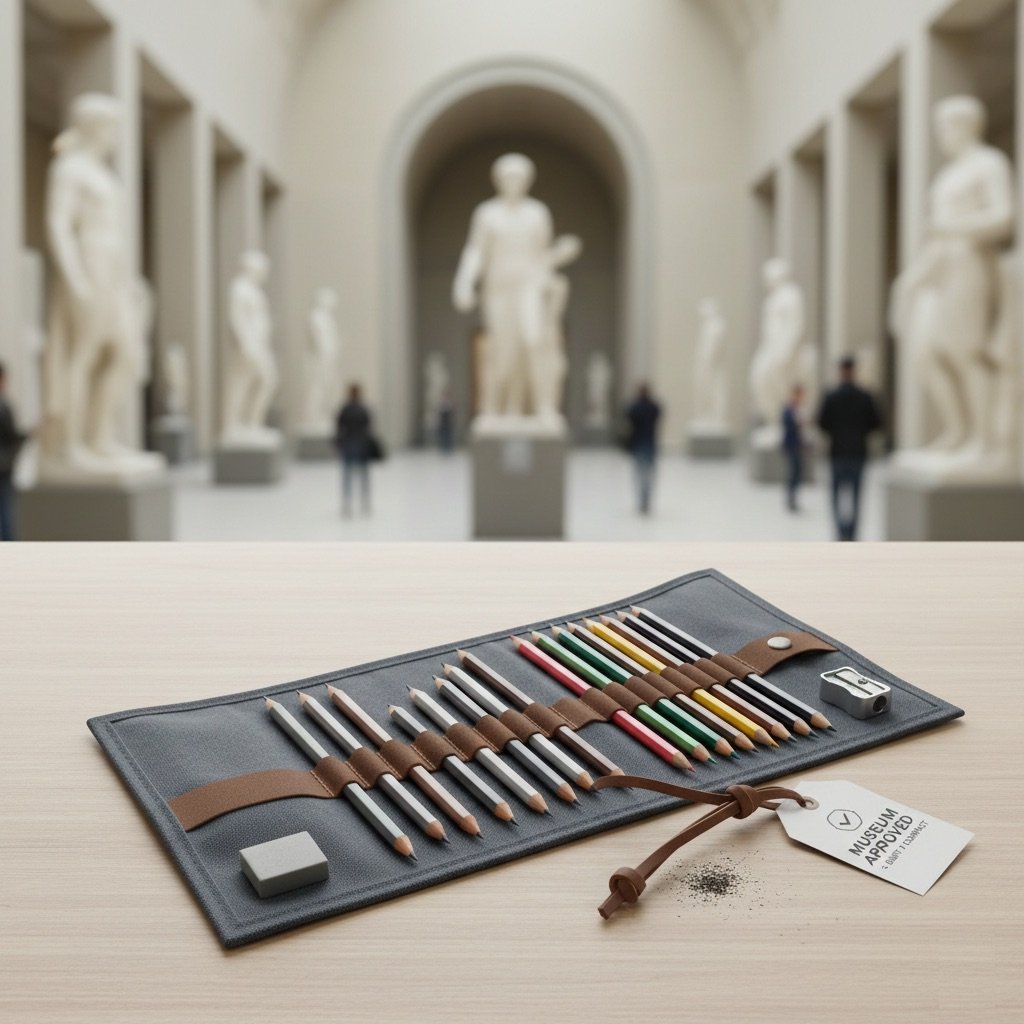
Ideal Pencil Case Features
- Soft fabric (no loud zippers or clacking plastic)
- Slim profile
- Easy access to tools
- No loose compartments that spill
Some artists prefer roll‑up cases because they open silently and lay flat.
Additional Tools That Make Museum Sketching Easier
A museum‑friendly art kit doesn’t need much, but a few thoughtful extras can elevate your experience.
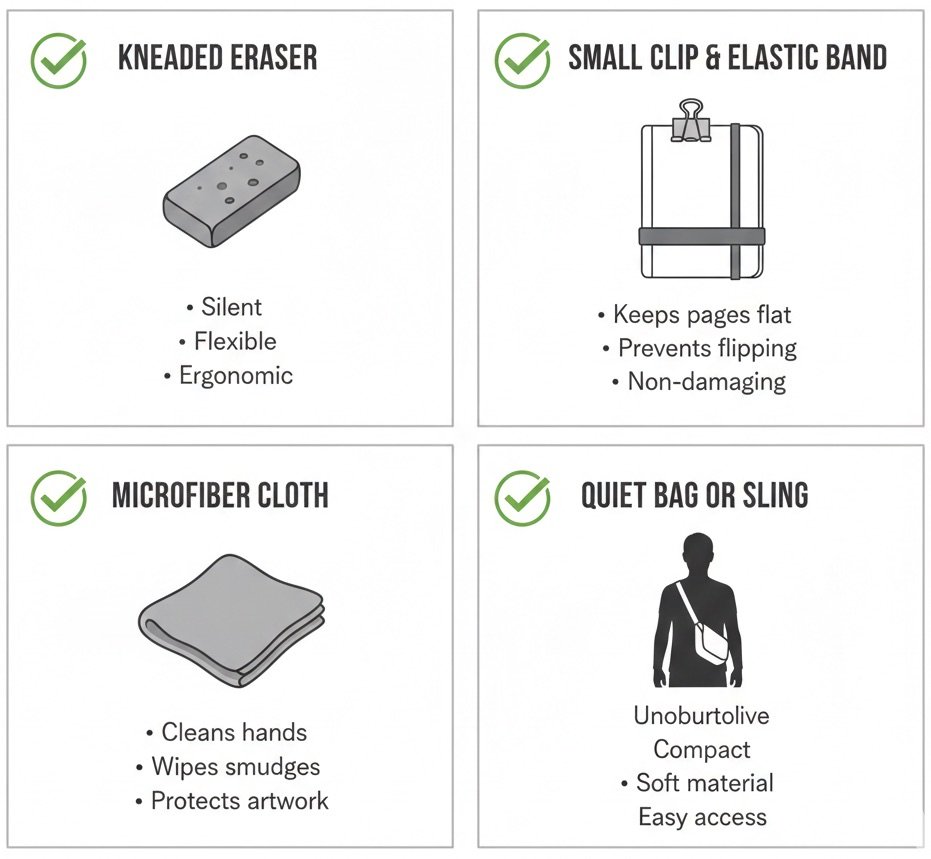
Kneaded Eraser
Silent, clean, and flexible—perfect for museum settings.
Small Clip or Elastic Band
Keeps your sketchbook pages from flipping while you draw.
Microfiber Cloth
Useful for:
- Cleaning your hands
- Wiping graphite smudges
- Keeping your sketchbook clean
Quiet Bag or Sling
Your museum kit should fit into a small, unobtrusive bag that doesn’t bump into displays or other visitors.
What to Leave Out of Your Museum‑Friendly Art Kit
To avoid issues at security or inside galleries, leave these items at home or in your main travel kit:
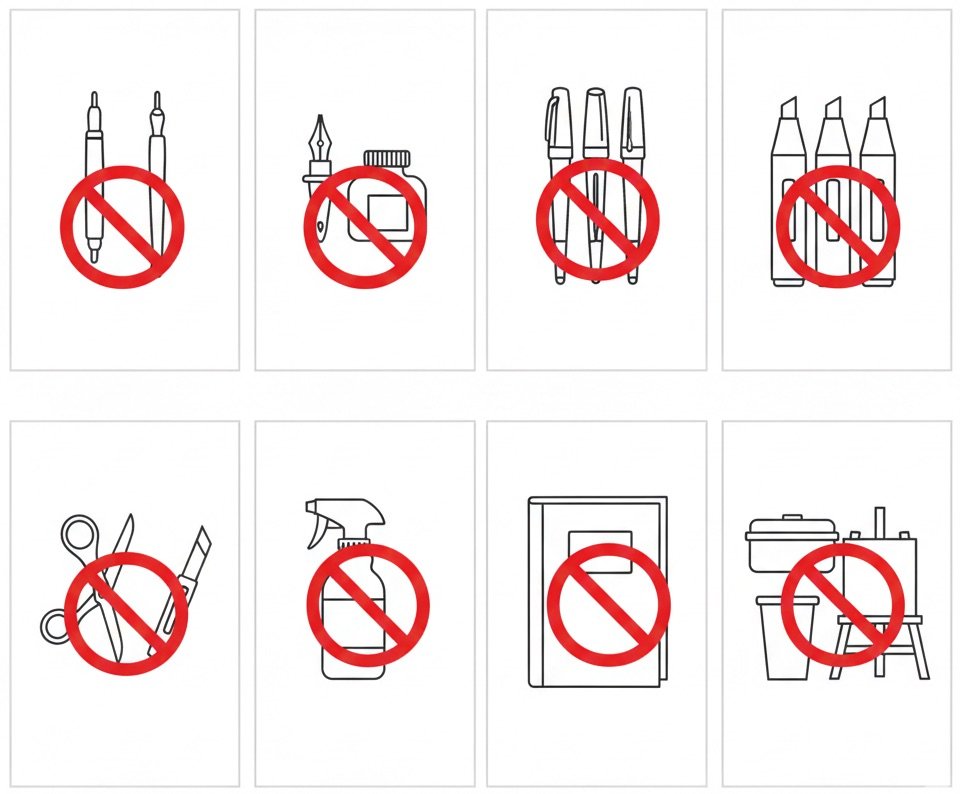
- Water brushes
- Ink pens
- Gel pens
- Alcohol markers
- Scissors or blades
- Spray bottles
- Fixatives
- Large sketchbooks
- Bulky accessories
Museums prioritize safety and preservation, so keeping your kit simple is key.
How to Organize Your Museum‑Friendly Art Kit
A well‑organized kit helps you sketch quickly and quietly.
Use a Minimalist Layout
- One small sketchbook
- Two or three pencils
- One eraser
- One sharpener
- One cloth
- One slim pencil case
This setup fits in a small bag and keeps you mobile.
Keep Your Tools Accessible
You don’t want to dig through your bag in a quiet gallery. Arrange your tools so you can grab them with minimal movement.
Pack Light
The lighter your kit, the easier it is to sketch while standing or walking.
Tips for Sketching Comfortably Inside Museums
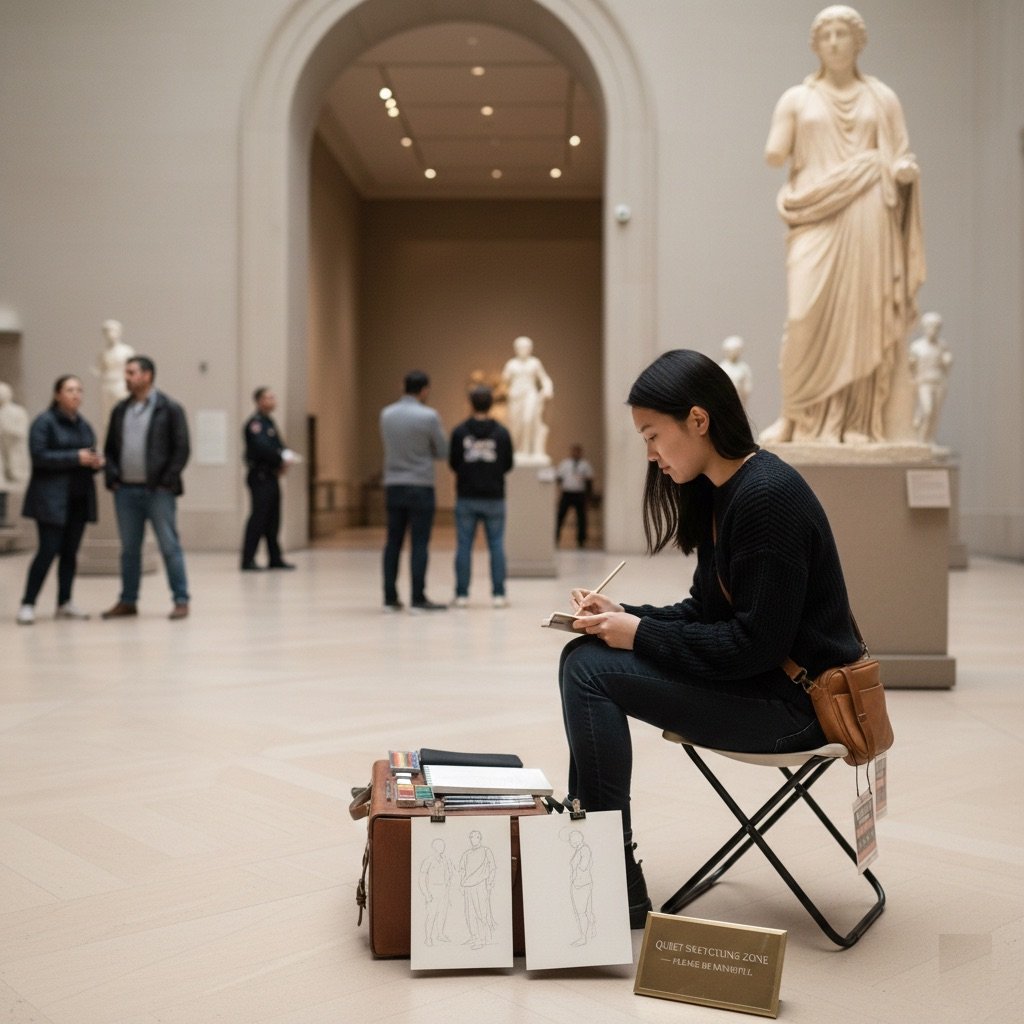
Choose the Right Spot
Look for:
- Corners
- Benches
- Low‑traffic areas
- Galleries with wide walkways
Stay Aware of Your Surroundings
Be mindful of:
- Visitor flow
- Guided tours
- People trying to view the artwork
Work Quickly and Loosely
Museum sketching is about capturing essence, not perfection.
Respect the Artwork
Never lean on walls, pedestals, or display cases.

 artistEarth | DESTINATIONS
Drawing North America | Artistic Locations from Coast to Coast
North America is a continent of vast contrasts—towering mountains, neon‑lit cities, quiet forests, desert canyons, and coastlines that stretch for thousands of miles. Drawing North America invites traveling artists to explore this diversity through sketching,...
Frequently Asked Questions
What tools are allowed in a museum‑friendly art kit?
Most museums allow dry media like pencils and small sketchbooks but prohibit wet materials.
Can I use ink pens in museums?
Some museums allow ballpoint pens, but many restrict all ink to protect the artwork.
What size sketchbook is best for museum sketching?
A small sketchbook, usually A5 or smaller, is ideal for staying unobtrusive.
Are sharpeners allowed in museums?
Yes, as long as they are enclosed and don’t scatter shavings.
Can I bring a folding stool?
Some museums allow them, but many do not—always check ahead.
Are colored pencils museum‑friendly?
Yes, as long as they are dry and used carefully.
Can I sketch sculptures and installations?
Absolutely—sculptures are excellent subjects for museum studies.
Do I need permission to sketch in a museum?
Usually not, but checking the museum’s sketching policy is always recommended.
Final Thoughts
Building a separate museum‑friendly art kit is one of the best ways to support your creative practice while respecting the rules and atmosphere of cultural spaces. With the right tools—compact, quiet, and clean—you can sketch comfortably, study masterworks up close, and turn every museum visit into a meaningful artistic experience. A dedicated kit keeps you prepared, confident, and ready to draw whenever inspiration strikes.
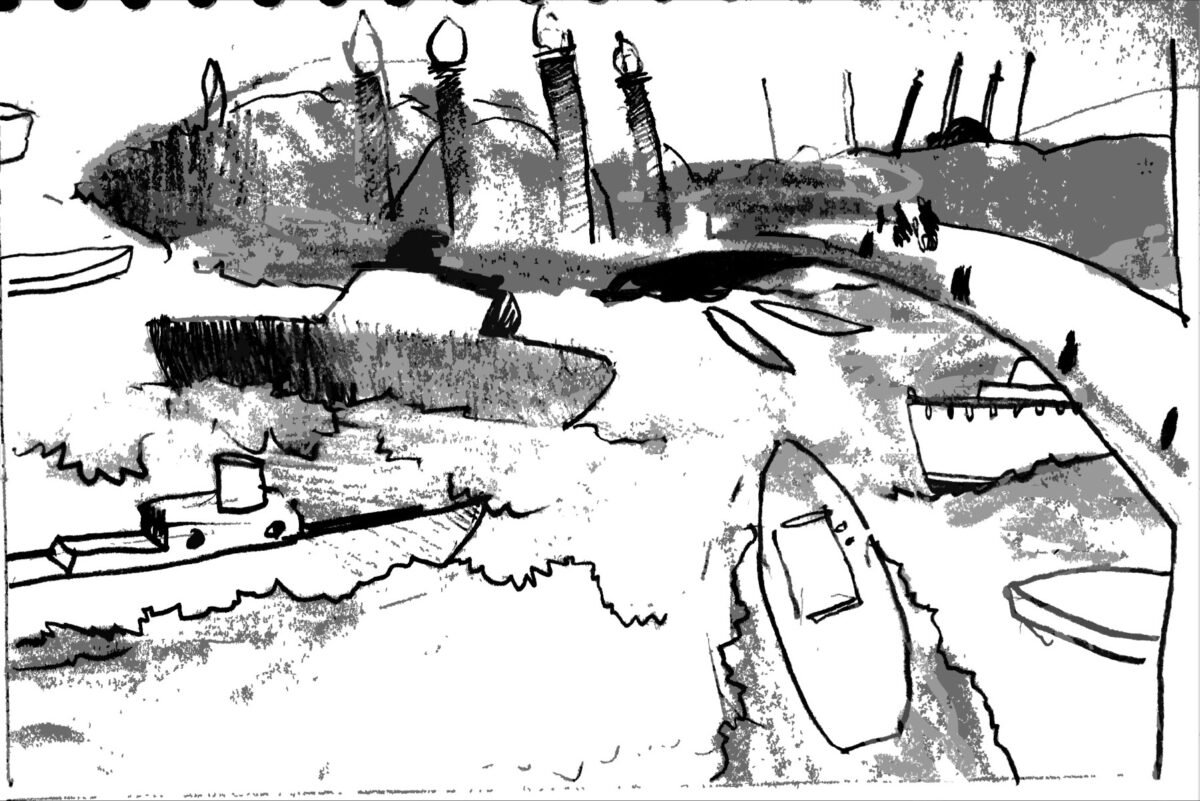
Ready to Share Your Work?
Every travel sketch on artistEarth.com comes from the Sketchbooks.org community. Share your work to be discovered here, and / or join us as a Travel Editor.
 From the Sketchbooks Community